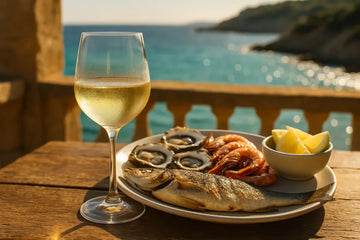
Key takeaways: Vermentino embodies the Mediterranean white wine par excellence, combining citrus freshness, floral notes, and saline minerality. Cultivated in Sardinia, Corsica, and Provence (under the name Rolle), this grape variety expresses itself across various terroirs. Ideal with fish or aperitifs, it combines simplicity and elegance. For a first tasting, discover our Atzei Saragat Vermentino, a perfect introduction to this grape variety.
You feel lost facing Mediterranean white wines' diversity? Vermentino wine, emblematic grape variety from Sardinia, Corsica, or Provence (where it's called Rolle), combines mineral freshness and citrus notes, with almond hint evoking sea shores. This dry white wine, cultivated on granitic or saline soils, offers aromatic palette of peach and white flowers, ideal to accompany grilled fish or summer salads. Discover its debated origins between Spain and Italy, its varied expressions according to terroirs, and why this grape variety, intimately linked to Mediterranean, is a wine treasure not to miss.
- Vermentino wine in brief: the essentials
- At mysterious origins of Vermentino
- Portrait of a grape variety: Vermentino characteristics
- Grape variety cultivation
- One grape variety, several terroirs: Vermentino's great regions
- Vermentino, Rolle, Pigato: untangling names and appellations
- How to taste and pair Vermentino wine?
- Our selection to discover Vermentino
Vermentino wine in brief: the essentials
Vermentino is a Mediterranean dry white grape variety, light and refreshing. Its citrus aromas, white flowers, and saline minerality make it a versatile wine, used in single-varietal or blend.
Main regions: Sardinia (DOCG Vermentino di Gallura), Corsica, Liguria, Provence (Rolle). This grape variety flourishes in warm and dry climates, on poor soils.
Ideal for summer dishes, it enhances seafood, grilled fish, and fresh salads. Its liveliness balances marine flavors, while its light structure suits aperitif.
For first tasting, try Atzei Saragat Vermentino, a perfect example of its qualities: freshness, balance, and subtlety for light and elegant summer meals.
At mysterious origins of Vermentino
History begins with a journey across Mediterranean, but Vermentino's origins remain shrouded in mystery. This white grape variety embodies a witness of Mediterranean exchanges, although its exact cradle remains uncertain.
Two hypotheses dominate. First evokes Spanish origin: grape variety would have crossed commercial routes to Corsica in 14th century, linked to Madeira Malvasia. Yet, Ligurian texts mention its existence under name Arratelau since 14th century, before Portuguese arrival in Madeira in 15th century.
Recent DNA analyses point toward Italian origin. Debate remains open, but genetic evidence links it to Malvasia and Ligurian Pigato. Although genetically identical, Pigato and Vermentino differ according to terroir: first often reveals spicy aromas, second marked minerality.
Whatever its exact origin, Vermentino flourishes on Mediterranean coasts. In Italy, it bears varied names: Favorita in Piedmont, Pigato in Liguria. In France, it's called Rolle. It adapts to dry and warm soils, preferring sunny climates. Today, it flourishes in Sardinia, Corsica, Liguria, and southern France, marking its millennial anchoring in these terroirs.
Portrait of a grape variety: Vermentino characteristics
Aromatic and taste profile
Vermentino is recognized by its pale straw-yellow robe with green reflections. Its nose offers citrus (lemon, grapefruit), white flesh fruits (pear, green apple), and light floral notes. It's a dry white wine marked by saline minerality, typical of marine terroirs. Its slightly oily texture balances with subtle almond or hazelnut finish.
"Vermentino is the perfect balance between Mediterranean fruits' generosity and saline freshness recalling sea breeze of its original terroirs."
In Sardinia, it expresses Mediterranean herbs and apricot; in Tuscany, acacia flowers and peach; in Provence (Rolle), floral elegance. Its iodine notes, reinforcing its sea link, make it a seafood and summer dishes ally.
Grape variety cultivation
A grape variety requiring optimal sunshine
True child of sun, Vermentino ripens late and thrives in warm and dry climates. Its vigorous vines require short pruning and careful trellising. Beware however of its sensitivity to powdery mildew, fungal disease requiring rigorous management.
Regions of choice
Originating from Italy, Vermentino shines in Sardinia (Vermentino di Sardegna DOC), Liguria, and Tuscany. Cultivated in Corsica, in Provence under name Rolle, and in Italian Piedmont as Favorita, it benefits from renewed interest in France, with planted area sharply increasing.
One grape variety, several terroirs: Vermentino's great regions
Italy, its cradle of excellence
Sardinia embodies absolute Vermentino reference. Vermentino di Gallura DOCG, only wine from this grape variety to benefit from highest Italian distinction, flourishes in unique terroir. Island's northern granitic soils, rich in minerals, give wine striking minerality and elaborate structure.
Cultivated up to 500 meters altitude, grape variety benefits from Mediterranean climate swept by saline winds. These conditions give birth to both powerful and elegant wines, with almond notes and long persistence. Island's intense light accentuates grape ripeness, harvested golden between August and September.
Beyond Sardinia, Liguria offers more lively grape variety version. In Colli di Luni, at Tuscany border, lean soils and maritime influence forge citric and saline wines. In Tuscany, notably in Maremma, Vermentino adopts fuller profile, with exotic fruit aromas, sometimes barrel-aged for more complexity.
Sardinia is undoubtedly Vermentino's kingdom, as evidenced by richness of our Sardinian wines selection.
France, its second homeland
France adopted Vermentino under name Rolle, notably in Provence and Languedoc. Used in blend, it brings freshness and floral notes. Its grapefruit and citrus zest aromas perfectly match summer dishes.
In Corsica, grape variety becomes Vermentinu, Mediterranean island mirror. Cultivated in Figari or Patrimonio vineyards, it captures maquis scents and saline reflections of sea winds. Its lively and fragrant wines evoke mandarin and aromatic herbs, with slightly bitter finish recalling green almond.
| Region | Local name | Typical wine style |
|---|---|---|
| Sardinia (Gallura) | Vermentino | Structured, mineral, complex, almond notes |
| Tuscany (coast) | Vermentino | Rich, fruity, exotic fruit notes |
| Liguria | Pigato | Saline, herbaceous, light, fine bitterness |
| Corsica | Vermentinu | Lively, citrus and maquis aromas |
| Provence / Languedoc | Rolle | Fresh, floral, often in blend |
Vermentino, Rolle, Pigato: untangling names and appellations
Vermentino is a white grape variety with multiple names according to regions. Genetically identical, this grape variety develops stylistic variations linked to terroirs and local traditions. European regulation from 2018 specifies that only term "Vermentino" is reserved for Italian wines, hence use of "Rolle" in France.
- Vermentino: Favored in Sardinia, Tuscany, and internationally. Its round wines reveal yellow and exotic fruit aromas.
- Rolle: Official name in Provence and Languedoc. It brings freshness and lightness to blends, with citrus notes.
- Vermentinu: In Corsica, it expresses insular identity through floral and citrus aromas.
- Pigato: In Liguria, it takes its name from spots on its berries. Its richer and spicier wines recall sea.
- Favorita: In Piedmont, it produces fruity (pear) and mineral wines, often drunk young.
Differences between these names lie in clones and wine-growing methods. In Liguria, Pigato is fuller and more aromatic than Vermentino, while in Provence, Rolle tends toward neutral profiles or complex amphora-aged cuvées.
Although genetically identical, these names translate regional diversity. Vermentino embodies grape variety's Mediterranean soul, between tradition and adaptation.
How to taste and pair Vermentino wine?
Originating from Mediterranean regions like Sardinia, Corsica, and Liguria, Vermentino is a light, fruity, and mineral white wine, perfect for summer meals. Its lively acidity and citrus or sea salt notes make it a versatile table ally. Discover how to pair and serve it to reveal all its finesse.
Perfect food-wine pairings
Thanks to its balance between freshness and delicate aromas, Vermentino pairs with varied dishes. Here are suggestions for harmonious combinations:
- Sea products: Grilled fish (sea bass, sea bream), oysters, marinated octopus. Its minerality exalts seafood salinity, while balancing their richness.
- White meats: Roasted poultry with Provence herbs, veal cutlet with lemon. Its herbaceous notes match Mediterranean condiments like rosemary or thyme.
- Vegetarian dishes: Salads, spring vegetable risottos, grilled artichokes. Its lightness compensates rich textures without crushing delicate flavors.
- Cheeses: Fresh goat cheese, buffalo mozzarella with olive tapenade. Its acidity softens cheese smoothness while enhancing their dairy notes.
Service advice
Serve it between 8 and 10°C to preserve its aromas. Standard white wine glass, with medium opening, concentrates its floral and fruity effluvia.
Thanks to its liveliness, Vermentino enhances dishes without dominating them, a versatile table partner.
In Sardinia and Liguria, it traditionally pairs with fish broths, seafood pasta, or herb focaccias. In Corsica, it matches local charcuterie dishes. Its fruity elegance exports to Mexican fish tacos or light sushi.
Our selection to discover Vermentino
Best way to understand Vermentino remains still to taste it.
Atzei Saragat Vermentino 2023 is a classic Sardinian expression, with its intense yellow robe and generous aromas of rosemary, elderflower, and lychee. This wine offers smooth attack, savory and lively texture, with good structure.
For different experience, Silvio Carta Su Puddu Vermentino 2023 surprises with its explosive nose of yellow peach and tropical fruits, accompanied by banana and wild herbs notes. This wine stands out for its freshness and pleasantly bitter finish.
To guide your choice, here are some tips:
- For freshness and minerality: Look for Vermentino di Sardegna or Provence Rolle.
- For more structure and complexity: Opt for prestigious Vermentino di Gallura DOCG.
- For richer and fruitier profile: Explore Tuscan coast Vermentinos.
FAQ
What are Vermentino's main characteristics?
Vermentino is distinguished by its refined aromatic profile and beautiful liveliness. This dry white wine displays pale straw-yellow robe with green reflections in its youth. Its nose expresses itself with elegance, revealing citrus notes (lemon, grapefruit), white flesh fruits (green apple, pear), and white flowers. What makes this grape variety stand out is this subtle touch of bitter almond or fresh hazelnut in finish. On palate, Vermentino surprises with its freshness and characteristic saline minerality, especially for wines produced near coasts. Texture can be slightly oily, giving wine beautiful palate presence without heaviness.
Does Vermentino have other names according to regions?
Yes, Vermentino is a grape variety with multiple identities. In Italy, it's also called Pigato in Liguria and Favorita in Piedmont. In France, it bears name Rolle, particularly in Provence. This duplication isn't just local tradition question: it sometimes reflects subtle genetic variations. Thus, Ligurian Pigato probably developed by spontaneous mutation from Vermentino. Provençal Rolle, meanwhile, could be identical to Vermentino, but this genetic kinship remains to be confirmed with certainty. This diversity of names, like diversity of styles they produce, testifies to grape variety's adaptation to different Mediterranean terroirs.
What is the best Vermentino to taste?
Defining "best" Vermentino holds as much to personal taste as wine origin. Yet, one name often comes back at top of tastings: Vermentino di Gallura DOCG, produced in northeastern Sardinia. This grape variety particularly flourishes on Gallura's granitic soils, benefiting from sunny climate and continuous ventilation. Vermentino di Gallura Superiore establishes itself as reference, combining structure, complexity, and aging potential. For those seeking different profiles, Bolgheri Vermentino in Tuscany offers richer and fruitier style, while Provence Rolle brings welcome floral freshness in blends.
Why is Vermentino not used in some French wines?
There's a subtlety to clarify here: Vermentino isn't really prohibited in France. What explains its limited presence in some wine regions lies rather in regulation. In Provence and Languedoc, this grape variety is officially designated under name Rolle. This regulatory designation explains why "Vermentino" label isn't found on these regions' bottles. This regulatory distinction doesn't prevent grape variety from fully expressing itself, whether bringing freshness and floral notes to white wines or participating in Provence's emblematic rosé blends.
What dishes pair perfectly with Vermentino?
Vermentino proves particularly complicit with Mediterranean cuisine. Its freshness and minerality make it ideal ally of sea products: grilled fish (sea bass, sea bream), oysters, marinated octopus, or shellfish pair wonderfully with this white wine. But pairing doesn't limit to seafood. White meats, like roasted poultry with Provence herbs or veal cutlet with lemon, find in Vermentino a delicate but present partner. For vegetarians, mixed salads, stuffed vegetables, or spring vegetable risottos reveal unexpected complicity. Finally, fresh and lightly aged goat or sheep cheeses also exalt grape variety's aromas.
What specificities for Vermentino di Sardegna?
Vermentino di Sardegna DOC represents emblematic expression of grape variety in Sardinia, but it shouldn't be confused with prestigious Vermentino di Gallura DOCG. First designates broader regional appellation, while second corresponds to Sardinia's only DOCG appellation, reserved for most renowned production zone. Vermentino di Sardegna is distinguished by its freshness and Mediterranean garrigue aromas. It presents with pale straw-yellow robe with greenish reflections. Enthusiasts appreciate its saline minerality, balance between richness and delicacy, as well as its persistent finish. It's a wine that, while remaining accessible, tells story of sun-bathed land close to sea.
What is difference between Rolle and Vermentino?
Border between Rolle and Vermentino gradually fades under genetic analysis. Indeed, recent DNA studies found no genetic differences between Provençal Rolle and Sardinian or Ligurian Vermentino. Yet, this distinction isn't purely regulatory. Provence Rolle, cultivated in southern France vineyards, often expresses slightly different style from its Sardinian cousin. This phenomenon is explained by terroir adaptation and local wine-growing practices. Rolle tends to express itself with more floral sweetness, adapting to southern France's rosé or white blends. Italian Vermentino, particularly in Sardinia, often retains more structure and minerality. What's certain is that this same strain, depending where it's planted, tells different stories.
Where are estates cultivating Vermentino found?
Vermentino is mainly cultivated in Mediterranean regions, where sun and marine freshness combine. In Italy, Sardinia is grape variety's historic bastion, notably in island's north with Vermentino di Gallura DOCG. Tuscany, especially along its coast, successfully exploited grape variety, as evidenced by Bolgheri Vermentino. In Liguria, grape variety expresses itself under name Pigato. In France, it's cultivated in Corsica under name Vermentinu, and in Provence where it's called Rolle. It's also found in Languedoc, always under Rolle appellation. Each of these regions contributes to this grape variety's richness by offering it particular terroir, between granitic soils, sunny climates, and sea breezes.
What grape variety dominates Italian red wine production?
If Vermentino reigns supreme over several Italian white terroirs, undisputed king of Italian red wines is Sangiovese. It's this grape variety that gives birth to prestigious appellations like Chianti, Brunello di Montalcino, and Vino Nobile di Montepulciano. This black grape variety, originating from Tuscany, is distinguished by its great adaptability to different terroirs and exceptional aging potential. Note however that other Italian red grape varieties deserve their place on podium: Nebbiolo, Piedmont king, which produces mythical Barolo and Barbaresco, or Primitivo, equivalent of Californian Zinfandel, which expresses all its power in Apulia.